
welcome to the downshifting blog
With Clinical psychologist and burnout expert, Dr. sumi Raghavan, PhD

We Are Now Paying $2,000 a Night to Sleep
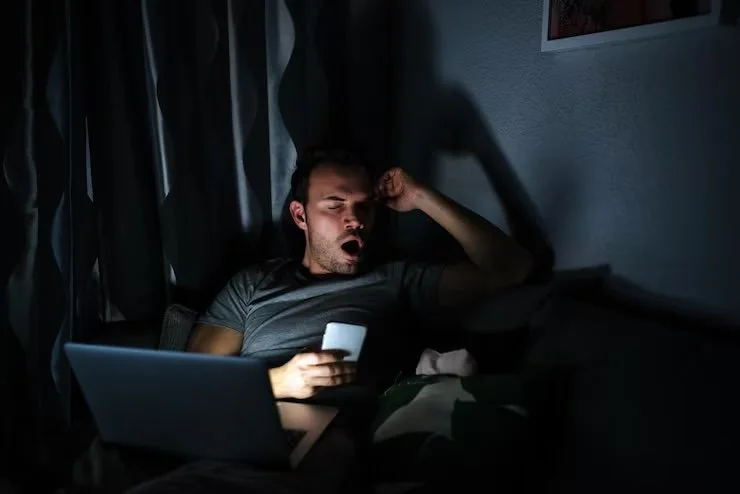
There is a hotel in New York right now where you can rent a room for close to $2,000 a night. Not for the view. Not for the location. For the mattress. For the biometric feedback, the contrast-therapy shower, the soundscape, the guided breathwork piped in to help you fall asleep. The industry has a word for this now: "hushpitality." The deliberate engineering of silence and solitude into a hotel stay, sold as a feature.

Optimizing Fun is The Opposite of Fun
Here's the problem: "unplugging" has become something you perform, not something you do. You post the beach photo with the caption about being off the grid. You tell your team you're unreachable, then check Slack twice a day anyway, quietly, so no one thinks you've actually stopped being useful. The rest itself has become a deliverable.

Downshifting on America’s Birthday
In therapy, we spend a lot of time looking for patterns. Not to diagnose the present by the past, but because the nervous system doesn't file feelings under dates. It files them under intensity. So when something in the present hits hard enough, the body doesn't just register the current event. It reaches back for every other time it felt something in that same register, whether or not the situations have anything in common on paper.
This is why the current moment might be pulling up other times you were let down by people who were supposed to protect you. Other times you were told, with a straight face, to accept something you knew was hypocrisy. Other times you had to hold two irreconcilable things at once just to get through a room, a dinner, a relationship. The analogies between a country and a family get made so often they've become a cliché, and I go back and forth on whether they hold up under real scrutiny. But the neurobiology underneath the cliché is real: intense feeling in the present can summon the full weight of every earlier version of that feeling, even when the current situation is dramatically different in its particulars. That's not you being dramatic or making it about yourself. That's a nervous system doing exactly what it's built to do.

The Body Keeps the Score — Except When It Doesn't
Wellness culture has a structural interest in turning systemic and neurobiological phenomena into individual self-improvement projects. Burnout gets reframed as something you heal with the right recovery routine. Trauma gets reframed as something stored in your body that you personally need to release. The focus stays on you — your practices, your progress, your unfinished work — and away from the conditions that created the problem in the first place.

Stop Calling it Burnout
I'm an "elder-millennial." I graduated high school in the year 2000, with a lot of talk about the hope for the new millennium and the promise of the power of human ingenuity. One of the many anthems of that year was Blink-182's All the Small Things — an upbeat 3-chord song Tom DeLonge wrote about his girlfriend at the time, leaving him small gifts when he came home exhausted from the early days of touring. Everybody wrote "Work Sucks, I know," in each other's yearbooks, passed it in notes through lockers, latching onto the simple but accurate catchphrase. The year before, the endlessly quotable dark comedy Office Space dropped, and my own work-sucks job was at the local movie theater — and you bet I saw Office Space a lot. People gave each other Swingline staplers as gag gifts (IYKYK). The theme was that almost all jobs will extract a piece of your soul and convince you it's real work, and that’s the world where I entered adulthood.

What I've Actually Changed (And What I'm Still Working On)
I started reading Yesteryear and it's a brilliant and somewhat controversial story of a right-wing tradwife influencer who has so deeply romanticized the pioneering Homesteading Era and then wakes up one day to find she has time traveled back to this actual era, and surprise surprise, it's not what she expected and she cannot quite cut it out on the farm. I'm not done, so no spoilers, but if you're reading it, I'd love your thoughts. It made me think about something important to the spirit of downshifting: are we slowing down, or are we flexing slowness in performance?

The Unbearable Emptiness of Doing: Why Doing Everything Right Feels Like Nothing At All
The vacation does not cure the burnout. The yoga class doesn't reset the chronically activated nervous system. The break, the nap, the time to yourself — it helps, genuinely, but it's not a substitute for something deeper. It doesn't fill the gaps that need filling.

You Don’t Have a Productivity Problem. You Have a Guilt Problem.
So picture this: it’s Sunday afternoon. There’s nothing you have to be doing. If you’re a parent, maybe the kids are playing on their own, and maybe the major chores are done, and the items on the list are not urgent. So, you hop on the couch and stretch your legs.
Then, there’s that hum. That low-grade unease. Quiet chatter. The to-do list moves through your mind, the second-tier worries step forward to remind you that they exist. That sense that you should be doing something.
You Are Not Addicted to Your Phone. You Are Being Farmed.
For years, the conversation around screen time has been soaked in shame. It's a topic that comes up weekly in my clinical sessions and in my personal conversations. You're distracted. You lack discipline. You should just put the phone down. As if the problem is your weak will, and the solution is trying harder.
But here's what I want you to remember: some of the most brilliant engineers on the planet — people paid extraordinary sums of money — have spent the last two decades studying how to make it neurologically difficult for you to look away. Your attention is a product, and you are the raw material. Of course you can't put it down. They built it that way.

There's No Ozempic for Feelings
Quick fixes aren’t coming. Here’s what actually works.
Hey fellow Downshifters,
There is no Ozempic for mental health.
No GLP-1 for depression, anxiety, or trauma. Self-improvement is a winding road, and change is often incremental and microscopic.
I'd like to walk you through why that's actually an incredible opportunity.
Convenience Maxxing Is Not Relaxing
I started this newsletter and community to help you choose quality over quantity—to unwind hustle culture and make space for more joy in life.
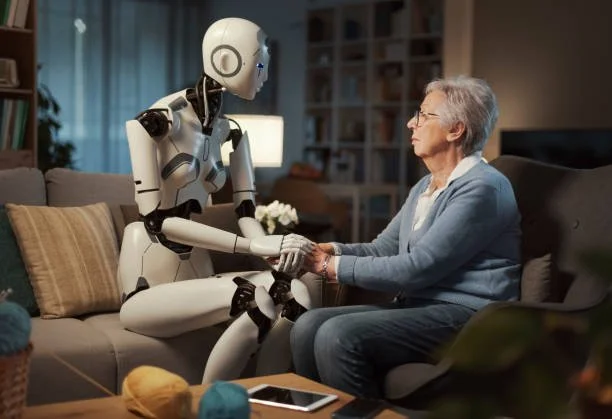
So, I’m very much the kind of therapist who will say that if you want ChatGPT to plan your meals for the week, go ahead. There’s no virtue in burnout. No valor in overworking. Outsourcing basic administrative tasks to AI? Totally reasonable—I do it too.
But there’s a darkly quiet cost: each AI interaction trades a little community and humanity for speed and convenience.

Cool Girls Take Breaks
Like much of the world, I’ve been captivated by Alyssa Liu. She’s got piercings and hair art. She steps off the ice and yells, “that’s what I’m f*cking talking about!” and then giggles with her teammates about Netflix. But more than that, she’s a masterclass in boundaries—not rigid walls, but rhythms she sets herself.

The Best Bunny and the Most Underrated Form of Self-Care
It was the third most-watched halftime show in history. Many declared, “joy is a form of resistance.”
I’d go further: joy is the most underrated form of self-care.
This Ain’t No Party, This Ain’t No Disco
I’d like to talk to you about slowing down and unwinding internalized capitalism, but “I aint got time for that now.”
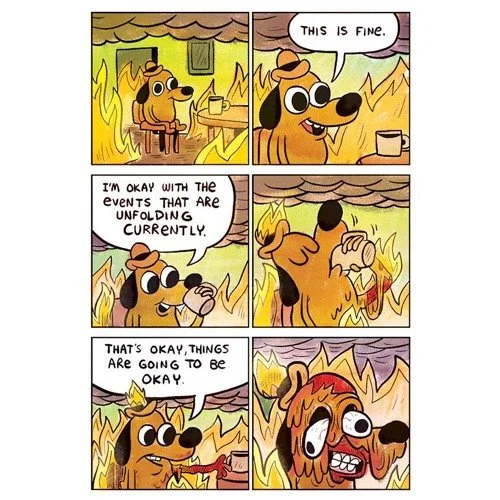
Downshifting in Dystopian Times
I’ve never played parkour, but I think we are all emotional parkourists now. Let me explain.

Welcome to Downshifting: Musings on Burnout, Culture, Mental Health and More
“Downshifting” is my somewhat clunky but thoughtful and deeply human attempt to wrestle with questions on how we slow down in a culture that demands us to speed up.